



















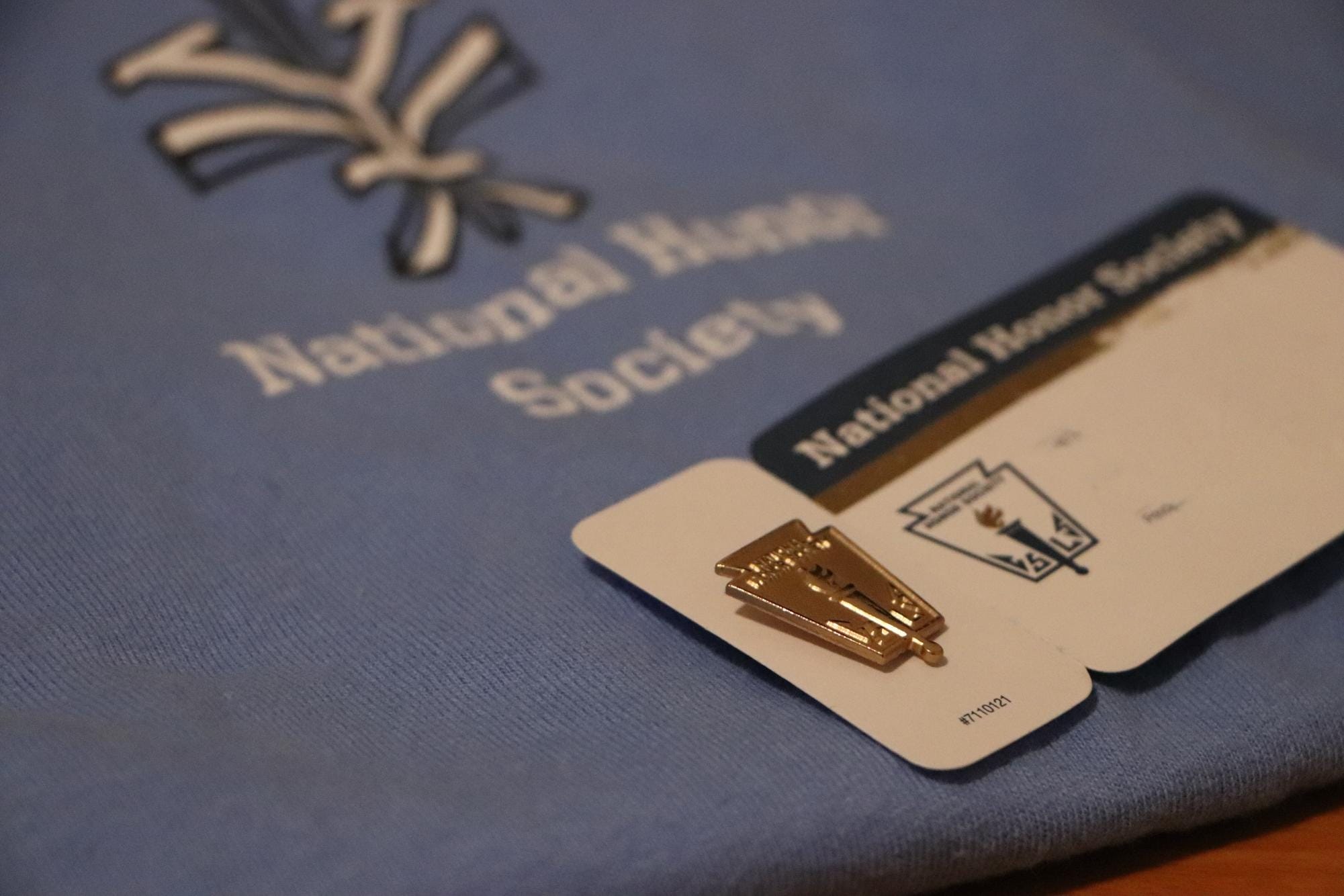
If you are a student in Arlington, the blue and gold emblem of National Honor Society (NHS) is likely a familiar sight. It is the ultimate sign of service on a high school resume: a badge that signals to the world that you are not just a student; you are a leader. However, a closer look at the requirements across the county line reveals a surprising reality: depending on which building you walk into every morning, the same gold and blue emblem might require four times as much to earn.
The National Honor Society is far more than a simple extracurricular; it is one of the oldest, most prestigious student organizations in the United States recognized by many universities. Founded in 1921, the National Honor Society was designed to do more than just reward high test scores. Its core purpose is to elevate a school’s commitment to the values of scholarship, service, leadership and character. By bringing together the highest achieving students, the organization creates a culture of growth, encouraging students to use their academic talents to better their local communities through hands-on volunteering.
While every school chapter has creative liberties to set their own specific cut-off requirement, there are some universal guidelines they must follow. To even receive an invitation to apply, a student must first meet the scholarship requirements, which typically means maintaining a cumulative GPA of 3.5 or higher. Once that academic gate is cleared, students are evaluated on the remaining three pillars: service, leadership and character. Universally, this process involves more than a GPA check; it requires teacher recommendations, detailed activity forms and often a short personal essay proving that the student embodies the NHS spirit.
For our school, the path to the gold emblem is defined by a rigorous 30-hour annual commitment. Unlike some chapters that allow for broad interpretations of service, our school enforces a strict internal balance to ensure students put in the work. Of the 30 hours, 10 hours must be events sponsored by our school and the additional 20 hours are independent.
To keep these requirements professional and transparent, the chapter utilizes a digital ledger called X2Vol to track every minute of service. This isn’t a simple honor system where a student can jot down a few tasks; the process requires contact information of the adult sponsoring your hours as well as a short written reflection to ensure the legitimacy of your hours. After those hours are logged and verified by the adult sponsor, the final green light rests within the chapter.
“When the contact verifies those hours, they are then ready to be approved. They get approval from someone in the Yorktown NHS chapter, either one of the advisors or one of those student leaders,” our school’s NHS president Damon Maher said.
These standards are not shared by every school in the area. Down the road at Washington-Liberty High School, the requirements for the same emblem look remarkably different. While our school’s students juggle a 30-hour commitment and a multi-layered verification process, Washington-Liberty members are only required to complete a total of 10 service hours.
This disparity extends to the administrative side as well. Rather than navigating through X2Vol to track their hours, Washington-Liberty students typically log their service hours through a simple Google Form. While both chapters technically represent the same national organization, the four times as much work required at our school highlights a significant local divide in what it truly takes to wear the NHS pin.